Overview
During my time at AlleyDev Engineering, I was tasked to build three MVP vending machines, each with a different goal.
Approach
All three MVPs involved a lot of collaboration with the electrical and UX teams. I joined design meetings to work through everything from the internal layout to the exterior design of each vending machine. Since each MVP had a strict launch date, I also worked closely with the CEO to plan out the mechanical development schedule.
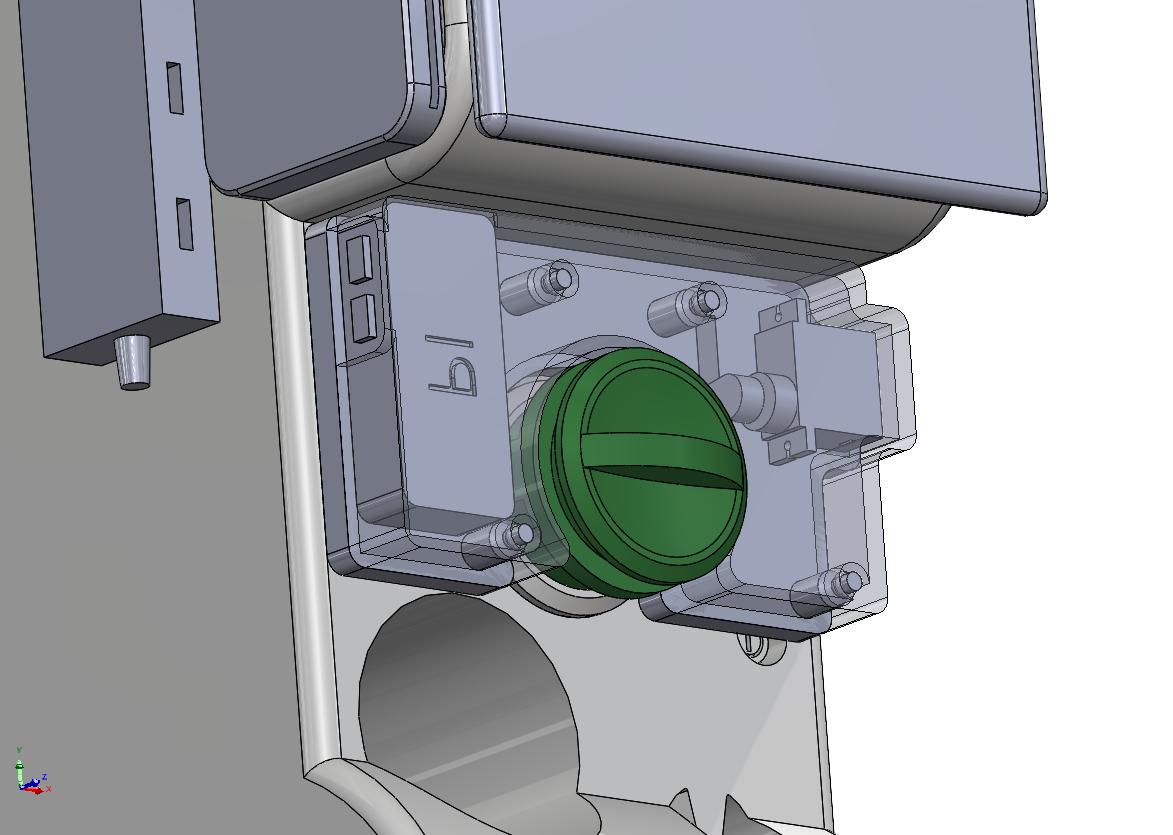
- MVP 1: The goal was to turn an existing Gashapon machine into a touchless POS system without changing how the machine originally worked. The biggest challenge was figuring out the internal layout of the servo motor and Raspberry Pi around the existing knob. I used snap-fit connectors to join the front and back halves of the case, which reduced the number of fasteners and made the machine easier to service.
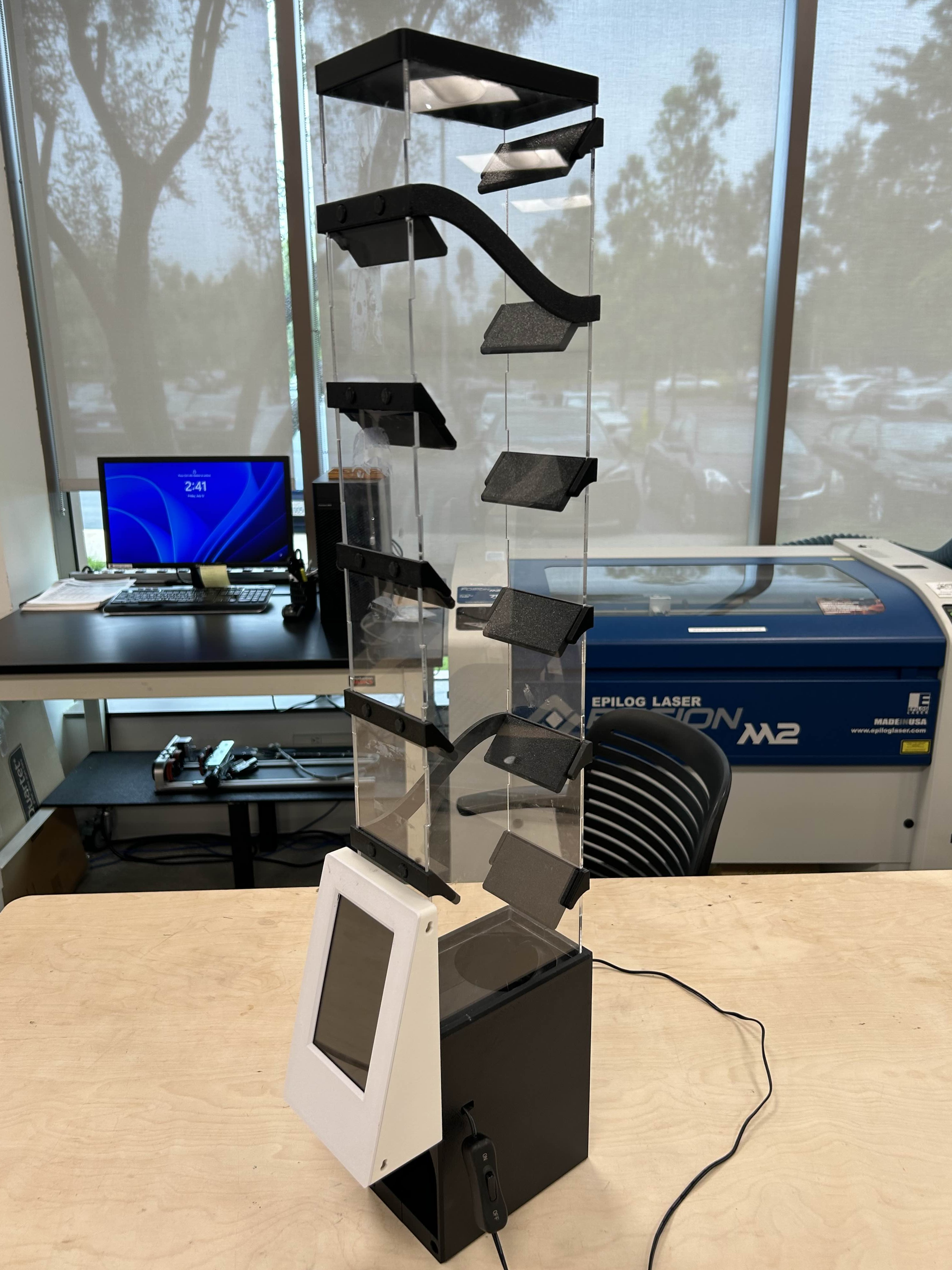
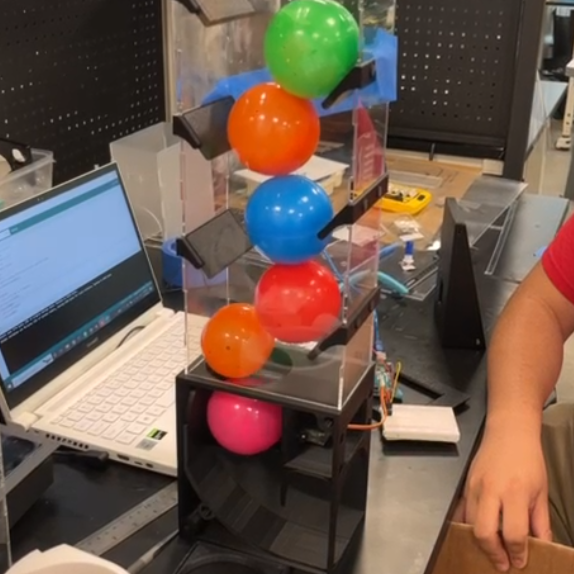
- MVP 2: This prototype was focused on making a much smaller vending machine that could fit into local boba shops / cafes with limited floor space. I wanted to make the most of the available volume, so I designed a cascading storage system that could hold 10 Gashapon capsules vertically. The machine also needed to be easy to ship, which meant designing the acrylic panels so they could be taken apart and stacked together. The final system combined the capsule storage with a touchless POS that used a servo motor to dispense the capsules.
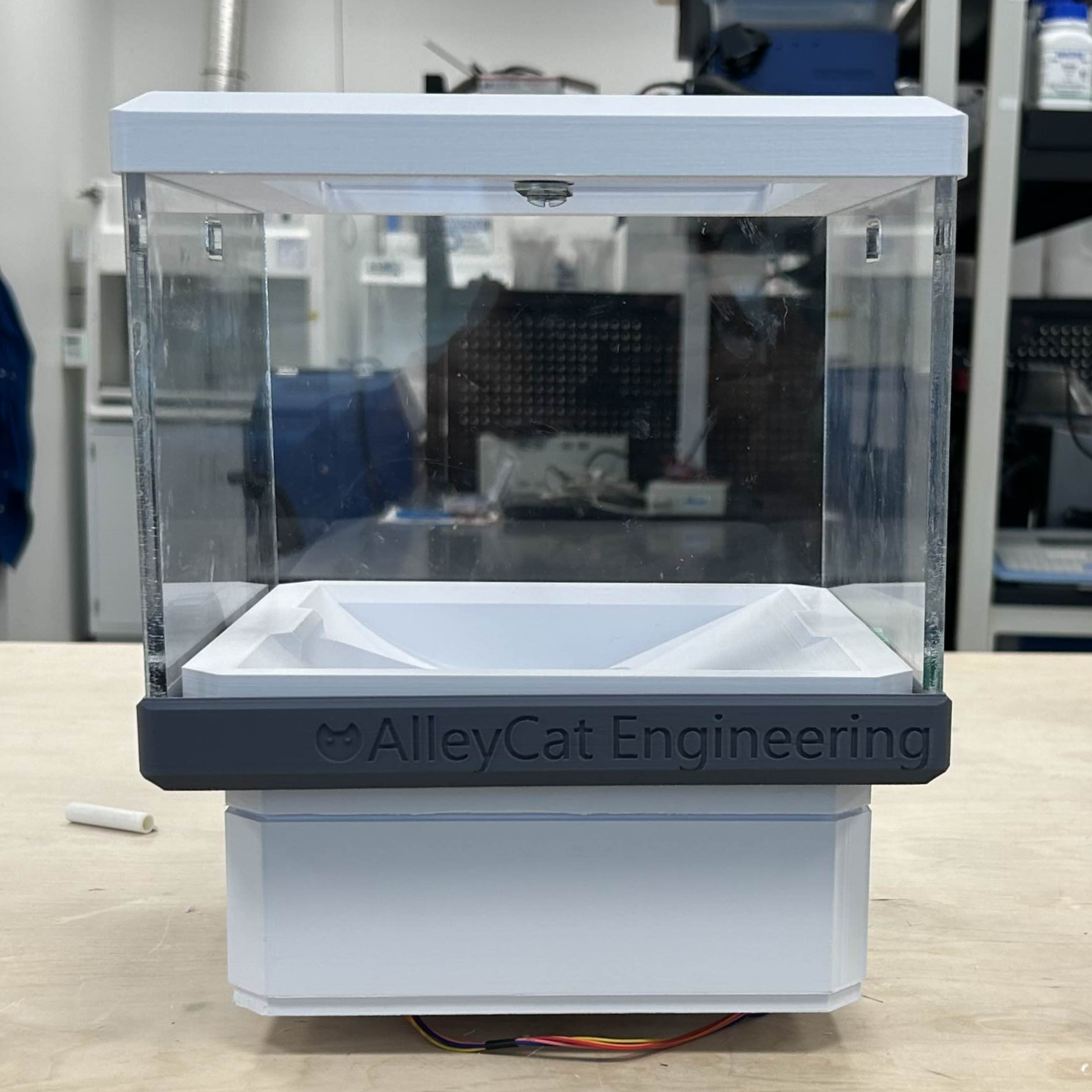
- MVP 3: I was tasked with creating a vending machine that could collapse down when it was not in use. I came up with the idea of having the main vending body and electronics collapse into the capsule storage section. This made the machine much more space efficient when being stored or transported, while still allowing it to expand into a full-sized vending machine with enough storage capacity for Gashapon capsules when in use.
Outcome
Overall, this was a really fun internship because I had a lot of ownership over what I was building. I enjoyed taking an idea from scratch to a working prototype. This internship was a good introduction of basic manufacturing constraints, multi-team collaboration, and building products for real users.