Overview
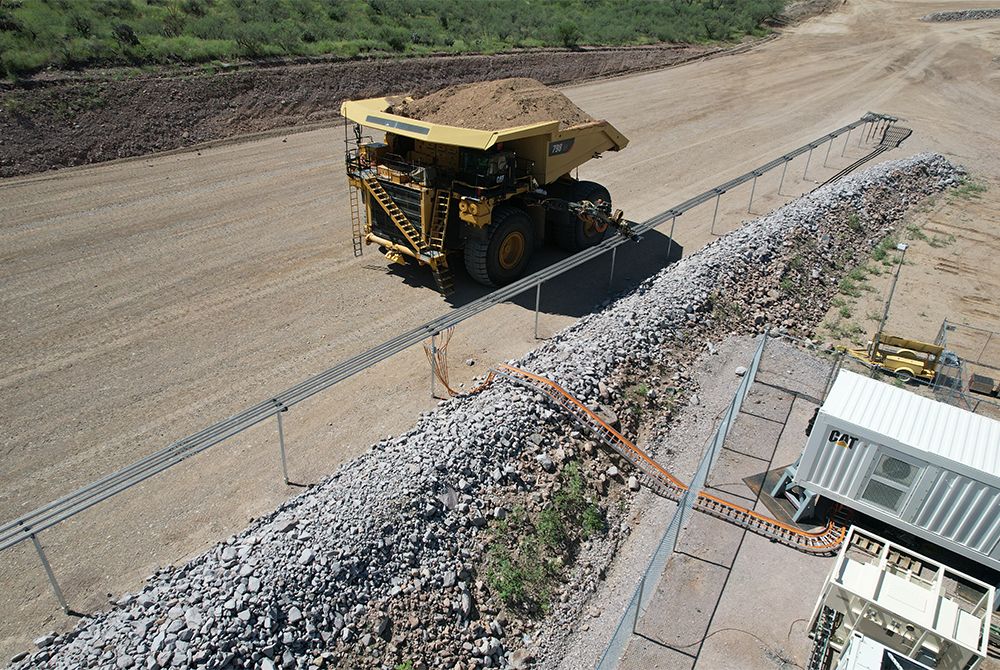
At Caterpillar, I joined as an engineering intern, and was put on a simulation team. I didn't have much experience with discrete-event simulation or mining engineering, so I had a lot to learn about open-pit mining and how all the different pieces fit together. My project was to find cost-effective, robust, and productive ways to deploy electric mine site infrastructure. In simple terms, I was looking at how to optimize Caterpillar's DET rail for different trucks, routes, and energy configurations.
Approach
As I started running simulations, I found that the existing dashboard made the results difficult to understand and share. The simulation data was also stored locally on my computer, which made it difficult to discuss my findings with other engineers and my manager. To solve this, I built a Python visualization tool that pulled data directly from the discrete-event simulations. I used 3D plots to show how productivity and cost changed over time, then built a simple dashboard where users could compare results from different simulations. I made the dashboard accessible online so I could share my work with my coworkers through a simple web link.
Outcome
The online dashboard made it easy and quick to share my mine site trends with others, and was appreciated by my team. While the every day work of setting up the simulations was somewhat repetitive, it was satisfying to understand the trends in productivity and cost over many different parameters. Overall, I had a great time learning about Caterpillar's industry, talking to many types of engineers, and seeing how the field of engineering spans so widely, from supporting real-world operators, product support, nitty-gritty design, and planning future operations.
I also enjoyed exploring Tucson with the other Caterpillar engineering interns!